Areal
- Regular & Regular & Italic & Italic
- Medium & Medium & Italic & Italic
- Bold & Bold & Italic & Italic
Areal Semi Mono
- Regular & Regular & Italic & Italic
- Medium & Medium & Italic & Italic
- Bold & Bold & Italic & Italic
Areal Mono
- Regular & Regular & Italic & Italic
- Medium & Medium & Italic & Italic
- Bold & Bold & Italic & Italic
Areal
Areal
- Regular & Regular & Italic & Italic
- Medium & Medium & Italic & Italic
- Bold & Bold & Italic & Italic
Areal Semi Mono
Areal Semi Mono
- Regular & Regular & Italic & Italic
- Medium & Medium & Italic & Italic
- Bold & Bold & Italic & Italic
Areal Mono
Areal Mono
- Regular & Regular & Italic & Italic
- Medium & Medium & Italic & Italic
- Bold & Bold & Italic & Italic
Features
Alt a
a
Alt t
t
Alt u
u
Alt y
y
Alt G
G
Alt R
R
Alt MWw
MWw
Alt ijIl1
ijIl1
Round Punctuation
.,:;!?
Alt Ampersand
&
About Areal
About this typeface
Info
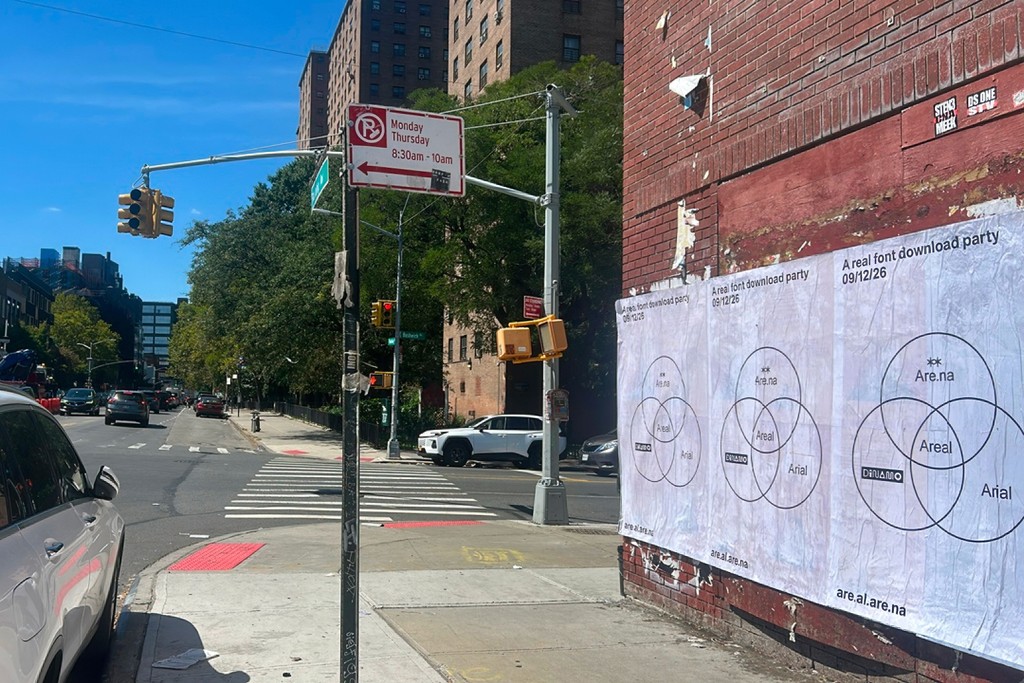
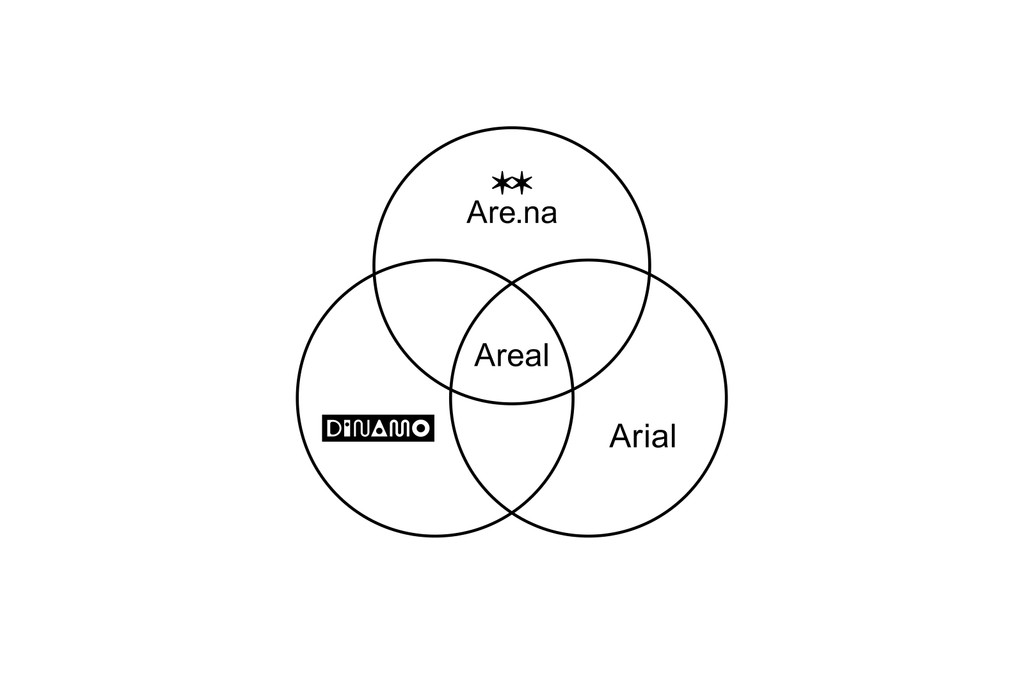
We initially designed Areal as a bespoke typeface for Are.na, to replace Arial, the typeface they had been using for almost 15 years.
Areal, a “revival” of Arial, is based on the first version of Arial that was used on the internet (v2.82). It’s entirely redrawn and rebuilt from the ground up. Most revivals draw on analog artefacts like antique books, record covers, posters, etc. But Arial has always been a digital typeface, born in the computer age, which means its earliest traces existed only as a software running on hardware that barely exists anymore.
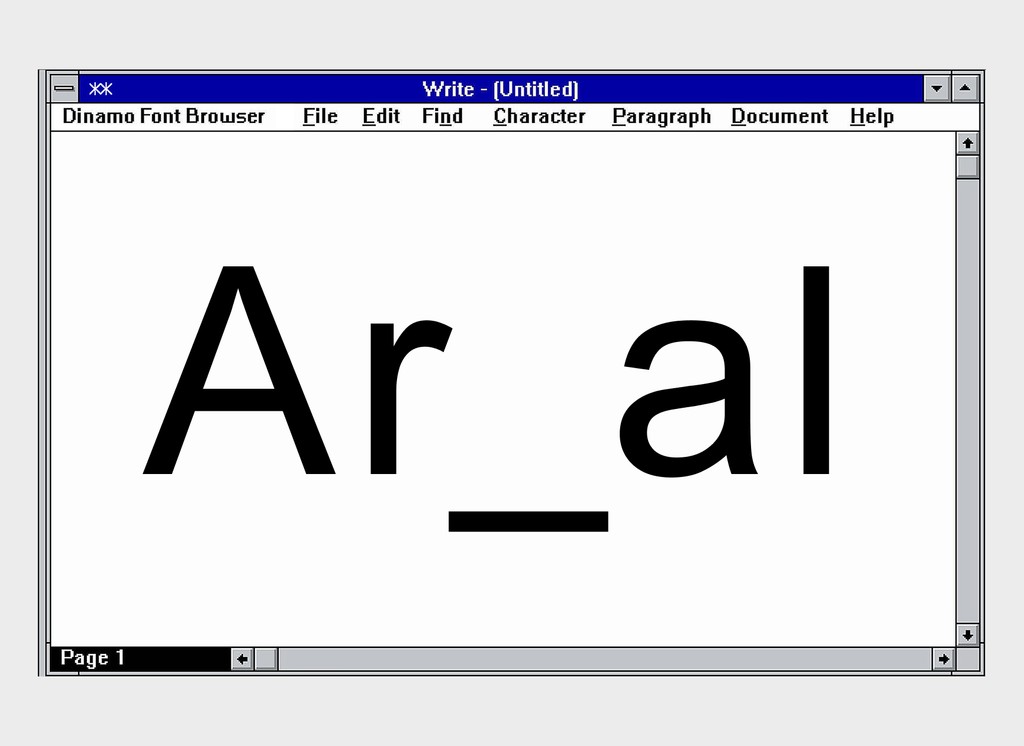
So to access specific versions of Arial, we worked with computer tech archivists to get access to some of the first personal computers and operating systems still capable of running it. Once we managed to do all the archeological work, we screenshotted the exact version of Arial that was present when the doors of the internet opened to the general public (the web-era Arial!) and those screenshots became our virtual blueprint: we digitally traced the sample characters we now had access to in the most faithful way, and that became the basis for Areal.
Areal is made for today’s day and age. The typeface keeps Arial’s familiar silhouette but rebuilds the outlines throughout: stem thicknesses have been streamlined, missing characters filled in, and the overall design consistency has been improved across weights. We added a Medium weight and also ligatures the original never included. And not to forget, Areal goes beyond Arial’s own design space by breaching into Mono and Semi Mono territory. All of this is packaged as a very-able Variable Font, for light weight file size and full control over all design parameters.
Darkmode optimization was another thing we took seriously. The variable font version of Areal carries a darkmode axis that kicks in automatically depending on whether you love it light or enjoy the darker of modes. Put simply, it corrects the performance of white text on dark background, making everything easier to read for the human eye.
Areal, of course, isn’t to be confused with Arial, though the goal is that you hardly notice the difference. Looking at Arial and Areal should feel like refreshing a browser page, or waking up on new years day. It’s the same, but it isn’t.
Lastly, we wanted to make ABC Areal publicly available, for free, for everybody. We hope you enjoy this project and using the fonts.
Credits
Concept: Dinamo + Are.na
Design: Dinamo (Fabiola Mejía, Fabian Harb, Johannes Breyer)
Partners: Are.na (Cab, Daniel, Damon, Meg)
Production: Dinamo (Hugo Jourdan)
Spacing and Kerning: Igino Marini
Supported Languages
Latin: Spanish, English, Portuguese, Swahili (individual language), German, Italian, Javanese, Malay (individual language), French, Vietnamese, Turkish, Polish, Filipino, Indonesian, Yoruba, Standard Malay, Sundanese, Igbo, Northern Uzbek, Romanian, West Central Oromo, Amahuaca, Malagasy, Dutch, Tagalog, Cebuano, Somali, Northern Kurdish, Haitian, Hungarian, Zulu, Nyanja, Shona, Czech, Quechua, Swedish, Kikuyu, Kinyarwanda, Umbundu, Hiligaynon, Iloko, Rundi, Kalenjin, Ganda, Xhosa, Central Kurdish, Afrikaans, Turkmen, Madurese, Low German, Luba-Lulua, Kongo, Danish, Neapolitan, Croatian, Southern Sotho, Minangkabau, Wolof, Finnish, Kituba (Democratic Republic of Congo), Slovak, Swiss German, Pedi, Sicilian, Eastern Oromo, Norwegian, Luo (Kenya and Tanzania), Catalan, Bemba (Zambia), Buginese, Venetian, Borana-Arsi-Guji Oromo, Kamba (Kenya), Lombard, Banjar, Soga, Achinese, Gheg Albanian, Nyankole, Balinese, Jamaican Creole English, Yao, Lithuanian, Bosnian, Waray (Philippines), Slovenian, K'iche', Gusii, Kimbundu, Southern Qiandong Miao, Northern Qiandong Miao, Soninke, Meru, Afar, Pampanga, Hani, Tosk Albanian, Standard Latvian, Central Aymara, Southern Aymara, Batak Toba, Toba, North Ndebele, Chiga, Sena, Bini, Galician, Tumbuka, Scots, Tonga (Zambia), Dimli (individual language), Kirmanjki (individual language), Acholi, Anaang, Makonde, Sardinian, Mandinka, Guadeloupean Creole French, Batak Simalungun, Batak Dairi, Batak Mandailing, South Ndebele, Standard Estonian, Ngazidja Comorian, Morisyen, Khasi, Upper Guinea Crioulo, Chokwe, Gourmanchéma, Kabuverdianu, Lushai, Ndonga, Uab Meto, Kekchí, Occitan (post 1500), Yucateco, Bari, Basque, Picard, Piemontese, Welsh, Chavacano, Bena (Tanzania), Nobiin, Konzo, Walloon, Friulian, Kara-Kalpak, Balkan Romani, Crimean Tatar, Vlax Romani, Maltese, Samoan, Silesian, Batak Karo, Mam, Western Frisian, Sango, Zapotec, Tzeltal, Jola-Fonyi, Tzotzil, Ladino, Efik, Tetun Dili, Tetum, Luxembourgish, Asturian, Papiamento, Tedim Chin, Fijian, Icelandic, Wayuu, Mandjak, Mapudungun, Kölsch, Macedo-Romanian, Kaonde, Montenegrin, Breton, Latgalian, Garifuna, Tonga (Tonga Islands), Amis, Caribbean Hindustani, Huastec, Maore Comorian, Mískito, Irish, Gagauz, Sranan Tongo, Corsican, Purepecha, Tok Pisin, Gilbertese, Kashubian, Mwani, Arbëreshë Albanian, Saramaccan, Võro, Atayal, Papantla Totonac, Bikol, Mankanya, Sangu (Tanzania), Seselwa Creole French, Faroese, Andaandi, Tahitian, Orma, Páez, Chamorro, Kalaallisut, Scottish Gaelic, Marshallese, Aguaruna, Chuukese, Maori, Mattokki, Romansh, Ladin, Central Nahuatl, Ojitlán Chinantec, Karelian, Asháninka, Naga Pidgin, Pohnpeian, Shipibo-Conibo, Northern Sami, Shuar, Alekano, Pijin, Walser, Rarotongan, Acheron, Kaingang, Palauan, Mirandese, Upper Sorbian, Dehu, Tuvalu, Aragonese, Bislama, Chachi, Pichis Ashéninka, Ashéninka Perené, Yanesha', Ixcatlán Mazatec, Kven Finnish, Niuean, Achuar-Shiwiar, Lower Sorbian, Hopi, Nomatsiguenga, Eastern Arrernte, Creek, Rotokas, Mohawk, Tokelau, Algonquin, Cofán, Warlpiri, Matsés, Murrinh-Patha, Chiltepec Chinantec, Veps, Amarakaeri, Interlingua (International Auxiliary Language Association), Oroqen, Cashinahua, Cashibo-Cacataibo, Candoshi-Shapra, Esperanto, Kala Lagaw Ya, Seri, Lule Sami, Southern Sami, Pipil, Caquinte, Inari Sami, Cimbrian, Istro Romanian, Anuta, Meriam Mir, Shawnee, Ido, Aleut, Pintupi-Luritja, Gooniyandi, Ume Sami, Wiradjuri, Volapük, Han, Western Abnaki, Záparo, Munsee, Lojban, Interlingue, Potawatomi, Minang, Manx, Interglossa, Latin, Klingon, Cornish, Novial and Eastern Abnaki